The Name "Cagayan" |
||
According to Dr.
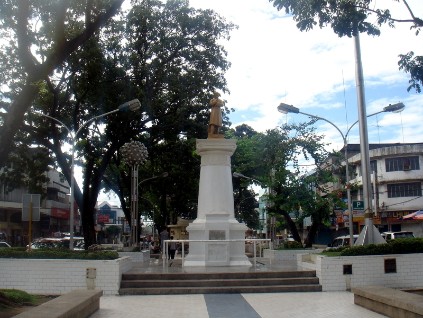
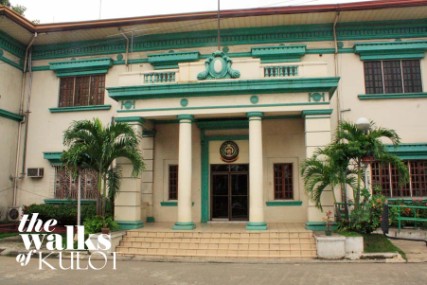
Lawrence Reid, There are three places in the Philippines named Cagayan, namely: Cagayan Province in Northern Luzon, Cagayan Islands in the Sulu Sea and Cagayan de Oro City (formerly Cagayan de Misamis) located in Northern Mindanao. People usually confuse Cagayan de Oro with Cagayan Province or vice versa, hence it is important to emphasize "de Oro" and "city" to distinguish Cagayan de Oro from other Cagayan places. History. In 1622, when the first Spanish Missionaries arrived, the people of Cagayan had tributary relation to Kudarat, the Muslim Sultan of Maguindanao Empire. Yet the people had not fully embraced Islam. With the encouragement of Friar Agustin, the local natives finally settled down in the area what is now Saint Augustine Cathedral and Gaston Park. On February 27, 1872, the Spanish Governor General issued a decree declaring Cagayan the permanent capital of Segundo Distrito de Misamis. All Spanish politico-military Governors of Misamis Province, who were all Lieutenant Colonels, lived at the Casa Real de Cagayan (now the City Hall). During this era, the town was known as Cagayan de Misamis. After the 1898 Treaty of Paris, Spain
ceded the Philippines to the United States. In 1899, conflict
between the Filipino Government led by General Emilio Aguinaldo
and the American colonizers erupted with the Philippine-American
War On March 31, 1900, the Americans invaded Cagayan de Misamis. Resistance fighters had already organized before the attack, but only retaliated only on April 7, 1900, led by General Nicolas Capistrano. The fighting erupted in the town center. This was followed by the Battle of Agusan Hill, led by Captain Vicente Roa, who was killed with his men. After years of resistance, the Americans finally colonized the town. Decades of peace and progress ensued. This however was broken when World War II erupted. In 1942, the Japanese detachment from Iloilo sailed to Cagayan and burned most of the town leaving few important buildings. In 1945, Cagayan was liberated by the Americans but suffered heavy bombardment. After the war, the town started
rebuilding. Through the efforts of Congressman Emmanuel
Pelaez,
|
  |
|
 a
linguist at the University of Hawai'i, the name "Cagayan" is
derived from a lost, ancient sound that evolved into "kagayan", "karayan", "kalayan",
and others. These derivatives all mean "river".
a
linguist at the University of Hawai'i, the name "Cagayan" is
derived from a lost, ancient sound that evolved into "kagayan", "karayan", "kalayan",
and others. These derivatives all mean "river".
Make a Free Website with Yola.
