Historical Sites
Plaza Divisoria (Golden Friendship Park)
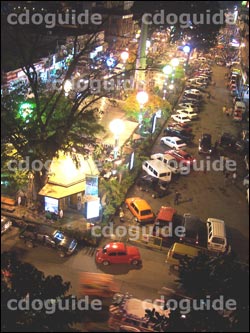
Divisoria is a Spanish word which means to divide. Located in downtown area, it is a series of parks dedicated to national and local heroes. Cagayan was constantly affect by fire that burned most of the town. In 1901, local authorities decided to build a "divider" parallel to the town to serve as a fire break. This divider or "divisoria" was later transformed into parks.
|  |

Saint Augustine Cathedral (San Agustin) It is the city's main Catholic Church and the
seat of the Archdiocese of Cagayan de Oro. The original church was built
in 1845 by the Augustinian Friars but was destroyed during the American
bombardment in 1945. Only the wooden cross in front of the church
survive up to this day. After the war, American missionary Fr. James
T.G. Hayes S.J., who later became the city's archbishop rebuilt the
church inspired by Gothic architecture. Its centuries old stained glass
windows came from another old Gothic | 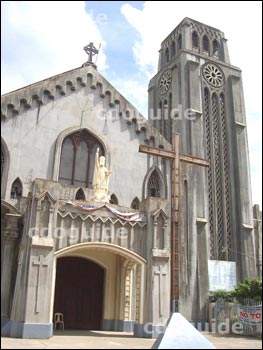 |
 church which
were donated by American Catholics from New York, USA.
church which
were donated by American Catholics from New York, USA.Casa del Chino Ygua (Balay na Bato) Built in 1882 by the Sia family, the first Chinese migrants in Cagayan de Oro. It was the site where Filipino revolutionaries meet and gathered for the Fiesta Nacional parade in January 10, 1899. Most of these revolutionaries would die during the Philippine-American war and are buried behind the house. Unfortunately, the house has been renovated twice and its original facade has long been destroyed. | 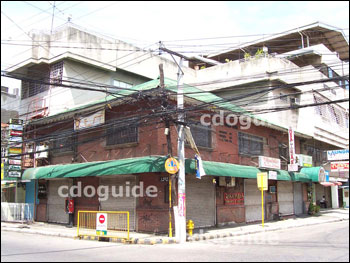 |
Museo de Oro Located within the Xavier University | 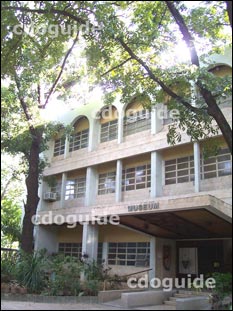 |
Museum of Three Cultures Opened in May 2008, the museum is located within
the Capitol University campus, Academic Building III. It has 3
galleries showcasing the history of Cagayan de Oro, Maranao Muslim
crafts and art works done by local artists. For inquiries, contact
(8822) 71-1980 local 290. | 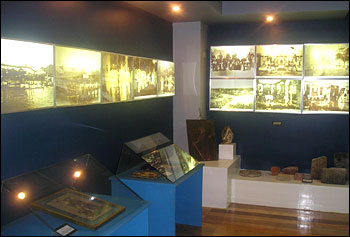 |
Bonifacio Park, Plaza Divisoria The monument is both dedicated to Andres Bonifacio, leader of the Philippine-Spanish revolution and the local town heroes. Beneath the monument are the remains of local soldiers including that of Captain Vicente Roa, who died in the battle of Agusan hill during the Philippine-American War. | 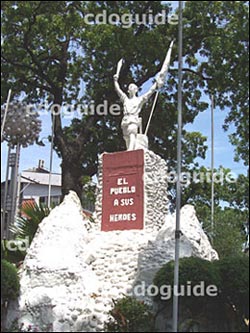 |
Rizal Park, Plaza Divisoria Dedicated on June 19, 1917 in perpetual memory of the country's national
hero, Dr. Jose Rizal who was executed on December 30, 1896 by the
Spanish authorities. Its marble marker is inscribed in Spanish. The
monument has survived the ravages of time including World War II. | 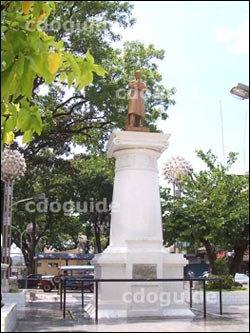 |
